Life Sciences ERP Buyer's Guide: Evaluate, Compare & Choose With Confidence
Selecting the right life sciences ERP software isn’t just an IT decision—it’s a regulatory, operational, and financial one. Pharmaceutical, medical device, and biotech manufacturers face increasing pressure from FDA inspections, evolving compliance requirements, and the inefficiencies of disconnected systems. Many organizations still rely on manual batch records, siloed QMS tools, or generic ERP platforms that weren’t built for regulated environments.
This Life Sciences ERP Buyer’s Guide is designed to help you cut through the noise. Whether you’re evaluating a pharmaceutical ERP system, exploring medical device ERP solutions, or replacing legacy software, this guide walks you through exactly what to look for. You’ll learn how to assess compliance readiness, compare vendors, and identify the difference between generic ERP systems and purpose-built solutions designed for FDA-regulated manufacturers.
Who This Guide Is For
This guide is built for decision-makers responsible for compliance, operations, and growth in regulated industries. That includes COOs, VPs of Manufacturing, Directors of Quality Assurance, and CFOs evaluating long-term technology investments.
If you're responsible for ensuring inspection readiness, improving production efficiency, or selecting an ERP for regulated manufacturers, this resource will give you the clarity needed to move forward with confidence.

Key Questions Every Life Sciences ERP Buyer Should Ask
Choosing an ERP system requires more than a feature comparison—it requires understanding how well a system supports compliance and scalability. This guide outlines the most important questions to ask every vendor, including how they handle validation, audit readiness and system integration.
You’ll also learn how to evaluate claims around pre-validated ERP software (IQ/OQ/PQ), how ERP systems support FDA requirements and what to watch for when comparing ERP vs QMS integration in pharma environments.
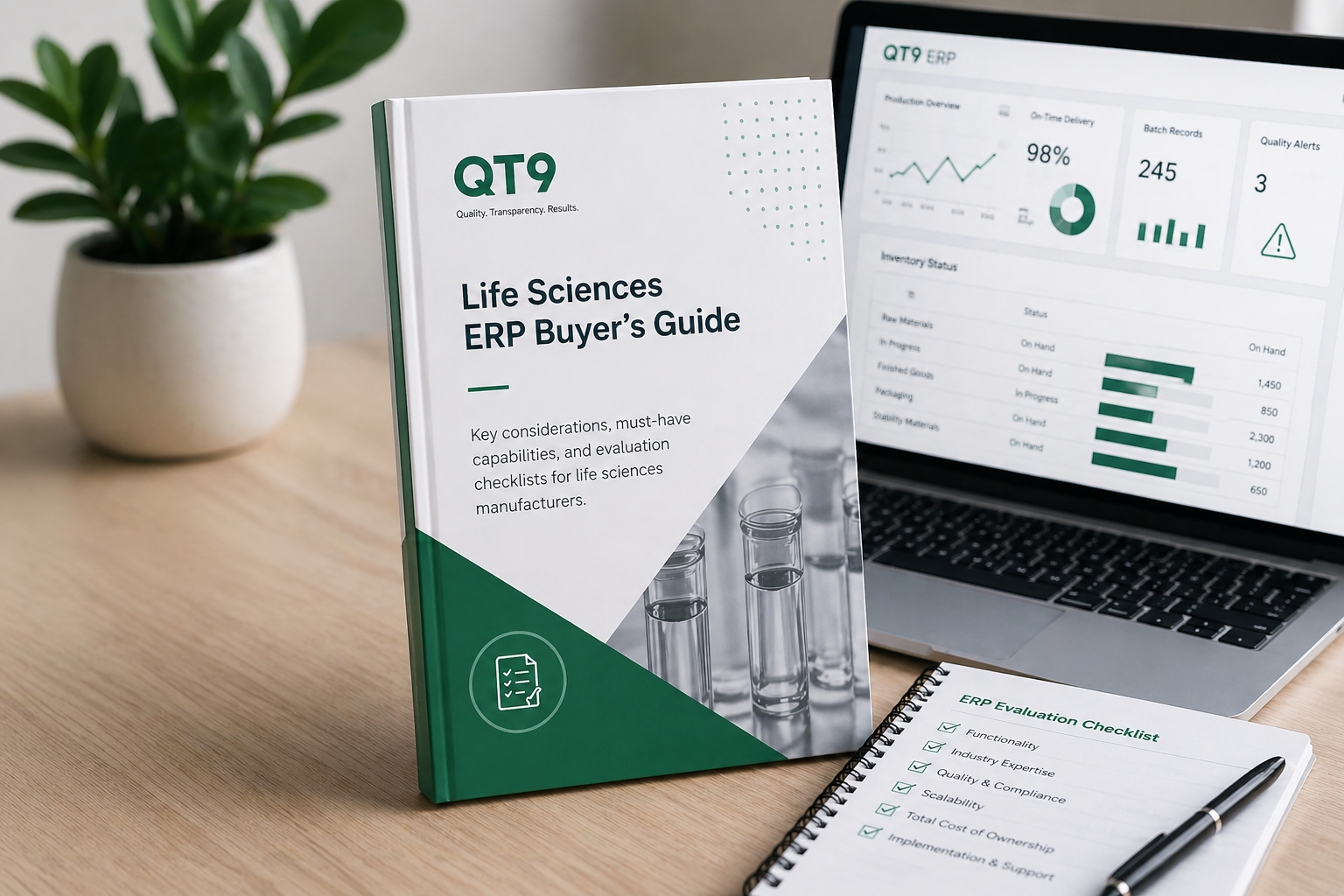
Download the Life Sciences ERP Buyer’s Guide
How QT9 ERP Compares to SAP, Oracle, and Generic ERPs
Not all ERP systems are created equal—especially in life sciences. Many platforms require extensive customization to meet regulatory requirements, increasing both cost and risk.
This guide breaks down how QT9 ERP compares to traditional systems like SAP and Oracle, as well as generic ERP platforms. You’ll see how a purpose-built system designed specifically for pharmaceutical, medical device and biotech manufacturers simplifies compliance, reduces implementation time and supports long-term scalability.
FAQ: ERP for Life Sciences
A pre-validated ERP system includes documented IQ (Installation Qualification), OQ (Operational Qualification), and PQ (Performance Qualification) protocols, reducing the time and cost required to validate software in regulated environments.
21 CFR Part 11 compliance ensures that electronic records and signatures within an ERP system meet FDA requirements for security, traceability, and data integrity.
Unlike general-purpose ERP platforms, QT9 ERP is designed specifically for regulated industries, offering built-in compliance features, faster implementation, and integrated quality management capabilities without heavy customization.
Run Your Operation With Clarity and Control
See how QT9 simplifies operations today and scales with you tomorrow.