
Quality, Operations and Insight on One Connected Platform
Every quality event is also a business event. QT9 connects them, so the people making decisions see the full picture before risk turns into returns, holds or findings.
What is the QT9 Connected Platform?
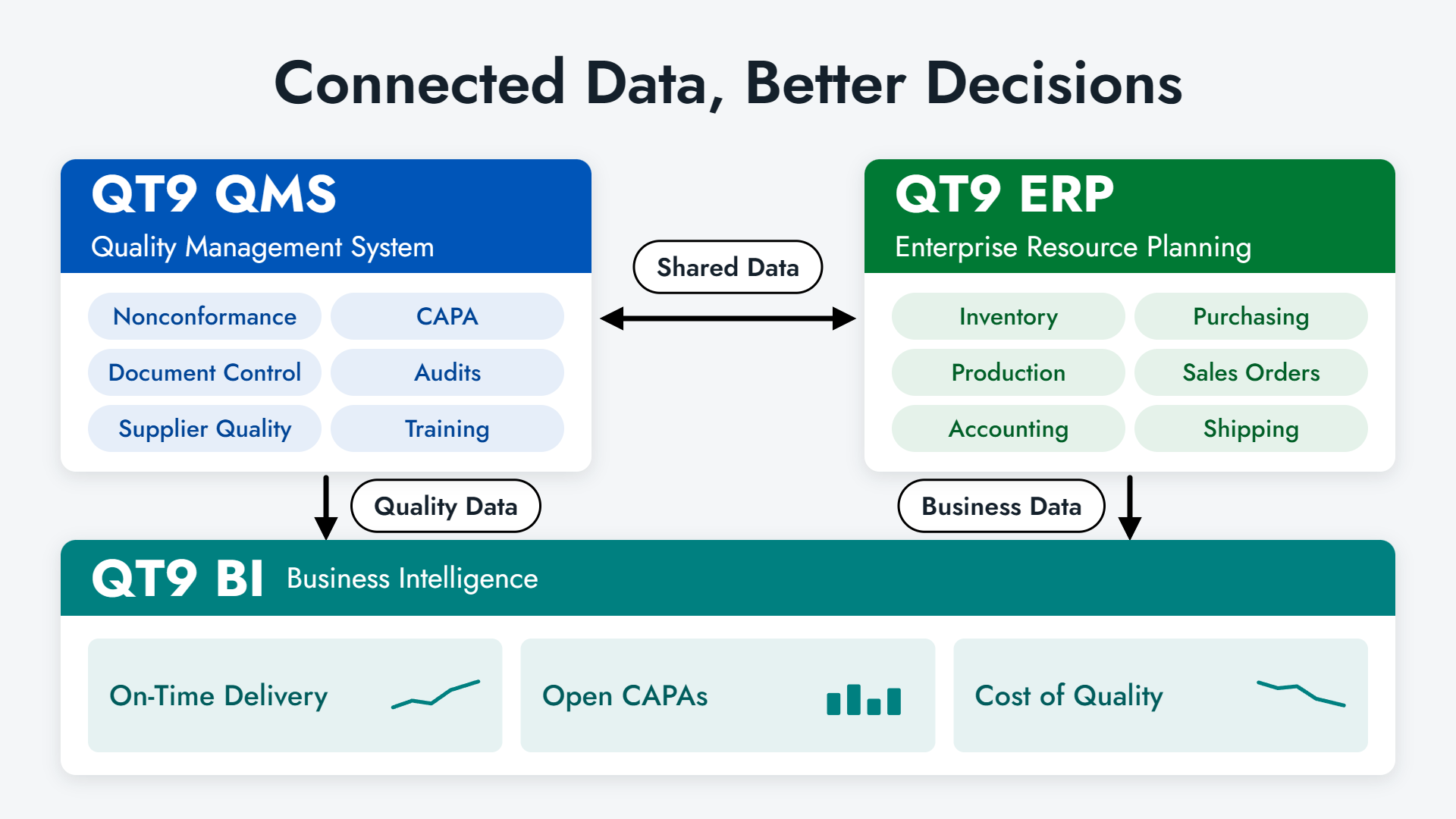
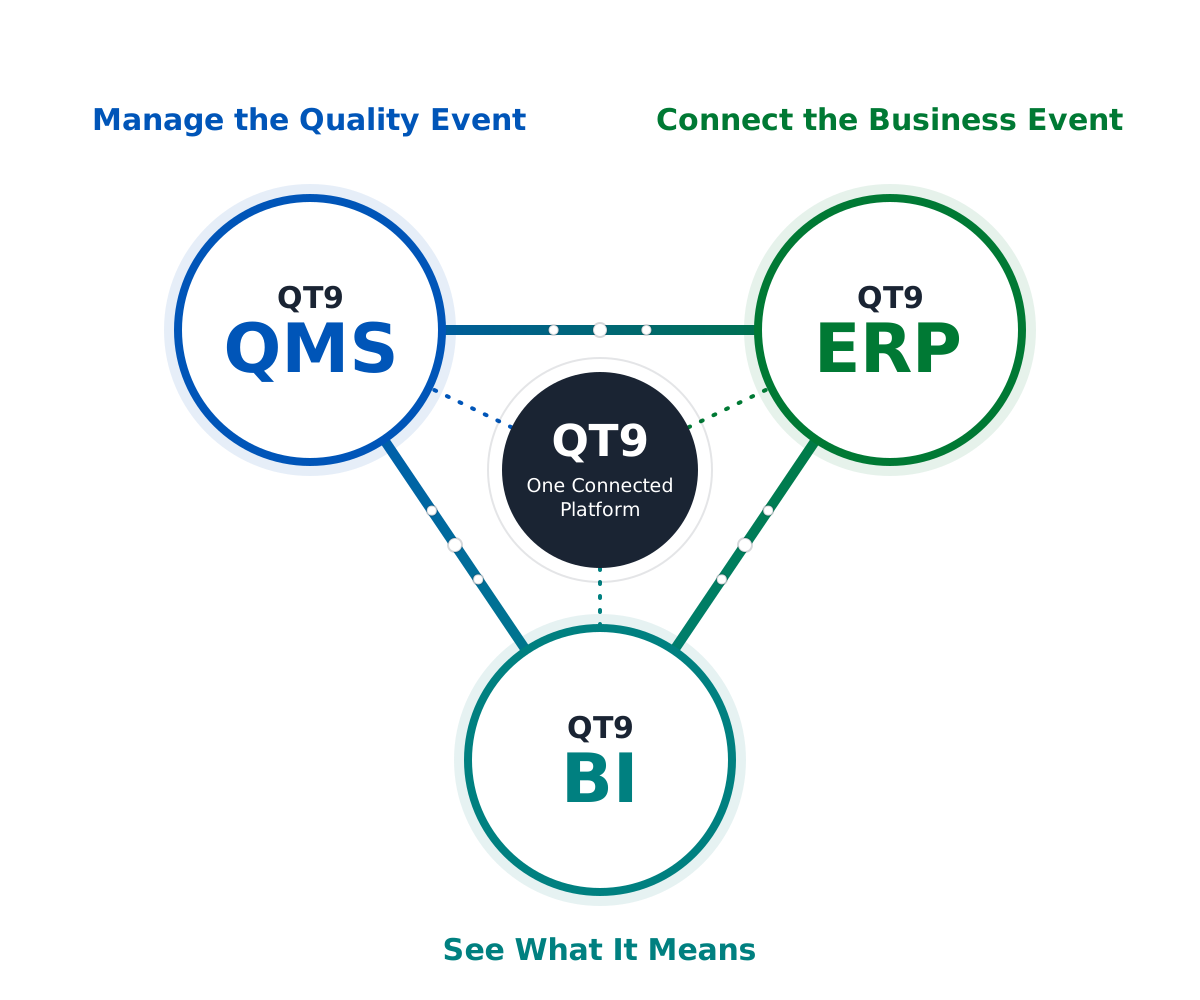
The QT9 connected platform is QT9 QMS, QT9 ERP and QT9 BI working as one system for regulated manufacturers. QMS manages the quality event, ERP connects it to the business event and BI shows what it means. Because the three are built to work together natively, information moves between quality, operations and leadership as work happens, from supplier approvals and inspections to document control, customer returns, batch records and reporting, without exports, middleware or manual re-entry.
Three Products, One Record
Each product does one job well. Connected, they give every team the same version of the truth.
QT9 QMS
CAPA, nonconformance, supplier quality, document control and training in one pre-validated environment.
- Electronic signatures and automatic audit trails
- Inspections triggered by receiving and production in QT9 ERP
- Approved SOPs and work instructions linked to jobs and BOMs
QT9 ERP
Purchasing, inventory, production and finance work from the same supplier, item and lot records as quality.
- Electronic signatures and automatic audit trails
- Inspections triggered by receiving and production in QT9 ERP
- Approved SOPs and work instructions linked to jobs and BOMs
QT9 BI
Live dashboards and reports across quality and operations, with no exports, spreadsheets or separate BI tool.
- Prebuilt quality views and a built-in query builder
- QMS, ERP and outside data sources in one view
- Start a CAPA or adjust production from the dashboard
See How a Blind Spot Forms and How QT9 Closes It
A supplier looks like the best choice on price and delivery. Months later, a customer return traces back to that supplier’s material. With QT9, the return, the lot, the supplier and the corrective action are linked records in one place, and the pattern shows up before the next order.
Where do Quality Blind Spots Hide?
A quality blind spot is a business decision made without the quality data behind it. These five are the most common.
Where Are Your Quality Blind Spots?
Most quality risks don’t hide in your quality system. They hide in the gap between quality data and the business decisions made without it. Answer ten questions to see where your blind spots are and what would close them.
How Does a Supplier Issue Move Through QMS, ERP and BI?
Here’s what happens when incoming material fails inspection on the connected platform.
Material Arrives
Receiving in QT9 ERP creates the right supplier and material inspection in QT9 QMS.
The Issue is Logged Once
A failed inspection opens a nonconformance in QT9 QMS, linked to the supplier, item and lot.
The Business Sees It
QT9 ERP works from the same supplier and lot records, so purchasing and production see the issue without an email chain or a spreadsheet.
The Fix Reaches Operations
Investigation and corrective action happen in QT9 QMS. Root cause findings feed into inventory, production and supplier decisions in QT9 ERP.
The Pattern is Visible
QT9 BI shows the supplier’s quality and delivery performance together, so a repeat issue is caught before the next order is placed.
Which Workflows Connect QMS, ERP and BI?
Common workflows on the QT9 connected platform include:
Unified Deployment Options
Every organization has different IT requirements. QT9 meets you where you are with dedicated data centers in both the U.S. and EU.
How is a Connected Platform Different From Integrating Separate ERP and QMS Systems?
Separate systems can be integrated, but the connection becomes one more thing to build, validate and maintain. QT9 QMS and QT9 ERP share one architecture, so the connection is part of the product.
Pre-Validated Platform
Audit-Ready Records
Secure by Design
FAQ: QT9 Connected Platform
The QT9 connected platform is QT9 QMS, QT9 ERP and QT9 BI working as one system for regulated manufacturers. QMS manages quality events, ERP connects them to purchasing, inventory and production, and BI turns the combined data into live dashboards.
QT9 QMS and QT9 ERP share a unified architecture with real-time, two-way data flow. ERP transactions such as receiving, work orders and customer returns can create inspections, nonconformances and complaint records in QMS, and root cause findings flow back to ERP.
QT9 BI puts quality and operations data in one set of live dashboards. It includes prebuilt quality views and a built-in query builder, can pull in outside sources such as SQL databases, APIs and Excel, and shares reports by role or scheduled email.
No. QT9 QMS, QT9 ERP and QT9 BI each work on their own. Many manufacturers start with QT9 QMS and add QT9 ERP or QT9 BI as they grow, connecting to the same records without a separate integration project.
Separate systems need middleware or custom APIs that must be built, validated and maintained, often across multiple vendors. QT9 QMS and QT9 ERP are designed to work together natively, with one vendor and one support team.
Yes. QT9 QMS and QT9 ERP are pre-validated and include electronic signatures, automatic audit trails and electronic batch and device history records. These features support compliance with FDA and ISO requirements and help maintain audit readiness.
Both. QT9 is available in the cloud, hosted in dedicated U.S. or EU data centers, or on-premise. QT9 ERP is not offered in the EU.
A quality blind spot is a business decision made without the quality data behind it, such as choosing a supplier without its quality history. The QT9 Blind Spot Assessment takes about five minutes and shows where your blind spots are.
Try QT9 for Free
Ready to simplify your quality processes? No credit card needed.