

ERP Software Industries Job Shop
Job Shop ERP Software for High-Mix, Make-to-Order Manufacturing
QT9 ERP helps job shops manage quoting, production scheduling, routing flexibility, job costing and shop floor operations within one connected ERP system designed for high-mix manufacturing.
Supports custom machining, fabrication and engineer-to-order production environments.
Built for Job Shop Manufacturing Leadership
QT9 ERP supports the operations, estimating, production and finance leaders responsible for managing high-mix, make-to-order manufacturing environments.
Production & Manufacturing Leadership
Maintain control across complex job shop operations.
- Job scheduling across work centers and machines
- Routing flexibility for custom production workflows
- Real-time shop floor visibility across active jobs
- Bottleneck detection across machines and operations
Estimating & Engineering Teams
Maintain accurate quoting and job planning.
- Quote-to-job workflows linking estimates to production
- Custom BOMs and routings per customer order
- Engineering revision tracking across job documentation
- Customer-specific requirements management
Supply Chain & Operations Leaders
Coordinate materials, suppliers and job scheduling.
- Job-specific material planning using MRP
- Supplier management and lead-time tracking
- Inventory visibility across raw materials and WIP
- Material allocation by job and production stage
Finance & Business Leadership
Maintain profitability and operational transparency.
- Real-time job costing across materials, labor and overhead
- Customer profitability tracking by project or job
- Margin analysis across custom orders
- Scalable ERP infrastructure for multi-facility operations
Trusted by Job Shop Manufacturers
Used by manufacturers operating in custom machining, fabrication and high-mix make-to-order production environments.
Built for Custom Manufacturing
Unified ERP + QMS Platform
Scalable for Growing Job Shops
Operational Benefits of Job Shop ERP
QT9 ERP helps job shops improve production visibility, maintain accurate job costing and deliver custom orders on time.
Job Scheduling
Coordinate jobs across machines, work centers and routing steps to meet delivery dates.
Shop Floor Visibility
Track job progress, labor hours and machine utilization in real time.
Job Profitability
Capture material, labor and overhead costs to understand true job margins.
Scalable Operations
Support more jobs, customers and production complexity without disconnected systems.
Measure the Financial Impact of Quality Issues

Challenges Job Shops Face
Many job shops manage estimating separately from production systems, making it difficult to track quoted costs versus actual job performance.
Without integrated systems, it becomes difficult to see where jobs are in the production process or identify delays.
Manual scheduling limits visibility into machine capacity, job priorities and resource availability.
Without real-time cost capture, job shops struggle to understand true profitability across custom projects.
Job shops must respond quickly to changing customer requirements, rush orders and material shortages while maintaining delivery commitments.
Job Shop ERP Software Built for Production Control and Job-Based Profitability
Job shop ERP software is an enterprise resource planning system designed specifically for high-mix, make-to-order manufacturers. It integrates quoting, production planning, inventory control, shop floor tracking, quality processes, and financial operations within a single platform built to support custom, engineer-to-order (ETO) and make-to-order (MTO) environments.
Job shops operate in fast-moving environments where every order is different, customer specifications change frequently, and quoting accuracy directly impacts profitability. From one-off prototypes to short production runs, manufacturers must manage custom bills of materials, engineering changes, customer-supplied materials, and real-time shop floor activity while balancing dozens of active jobs simultaneously.
QT9 ERP delivers purpose-built capabilities for job shop manufacturers managing quote-to-job workflows, flexible routing, job-based costing, work center scheduling, and real-time production visibility. From quote acceptance through final shipment, the system provides accurate cost tracking, operational control, and margin insight required to run profitable custom manufacturing operations.

Why Job Shops Choose QT9 ERP
Core ERP Capabilities for Job Shop Manufacturing
QT9 ERP connects quoting, purchasing, inventory, job execution and customer management within one unified platform built for high-mix, make-to-order manufacturing.
Material Requirements Planning (MRP)
Ensure materials are available for every job.
- MRP planning generates PO recommendations
- Job-specific material requirements
- Lead time and supplier management
- Minimum order quantities and economic order quantity
- Material shortage alerts
- Expedite purchase orders for rush jobs
Supplier Management
Maintain control across supplier relationships and purchasing.
- Supplier performance tracking
- Supplier lead times and on-time delivery
- Supplier pricing by part
- Purchase order history
- Supplier quality issues
- Approved supplier lists
Customer-Supplied Materials
Track customer-owned materials used in production.
- Track customer-supplied materials separately
- Zero-cost material allocation to jobs
- Customer material certifications
- Excess customer material returns
- Customer material shortage tracking
- Material liability and ownership
Quoting and Estimating
Generate accurate quotes for custom jobs.
- Material, labor, and overhead cost rollup
- Quote templates for similar jobs
- Multi-level BOM costing
- Quote revisions and version control
- Quote approval workflow
- Quote-to-order conversion
Sales Order Management
Manage customer orders and job creation.
- Customer PO tracking
- Customer-specific part numbers
- Special instructions and requirements
- Order acknowledgment generation
- Promised ship dates
- Order change management
Customer Portal
Provide visibility and collaboration with customers.
- Customer login for order status
- Real-time job progress visibility
- Document sharing and approvals
- Invoice and shipping history
- Quality documentation access
ERP for Job Shop Manufacturing Applications
QT9 ERP supports diverse job shop environments including contract manufacturing, precision machining, fabrication and prototype production.
Contract Manufacturing
- Multi-industry custom manufacturing
- Customer-specific processes and requirements
- Prototype through production runs
- NDA and proprietary work
- Material management and consignment
Precision Machine Shops
- CNC machining and turning
- Tight tolerance requirements
- Tool and fixture management
- Setup and changeover optimization
- Material certifications
Metal Fabrication
- Custom welding and assembly
- Sheet metal forming
- Structural steel fabrication
- Powder coating and finishing
- Customer designs and drawings
Prototype and Low-Volume
- Rapid prototyping
- Pre-production runs
- Engineering collaboration
- Design for manufacturing (DFM)
- Transition to production
Unified ERP and QMS Platform for Job Shop Manufacturers
Job shops cannot afford disconnected systems between production and quality management. QT9 ERP and QT9 QMS operate as a single unified platform that eliminates duplicate data entry, fragmented workflows, and manual reconciliation between quoting, shop floor activity, and quality documentation.
Quality events can originate directly from job-level operations, including first article inspections, in-process checks, nonconformance tracking, and corrective actions. Production data, inspection results, labor tracking, and customer-specific requirements remain synchronized in real time, creating complete visibility across estimating, manufacturing, and quality control.
Instead of managing separate software vendors and disconnected applications, you gain one architecture, one database, and one accountable partner supporting profitable custom manufacturing.

Financial Management for Job Shops
Accurate Cost Capture
- Material costs per job
- Labor costs per operation
- Machine time and overhead
- Outside services and subcontracting
- Scrap and rework costs
Profitability Reporting
- Gross margin by job
- Customer profitability
- Product line analysis
- Shop efficiency metrics
- Cost variance analysis
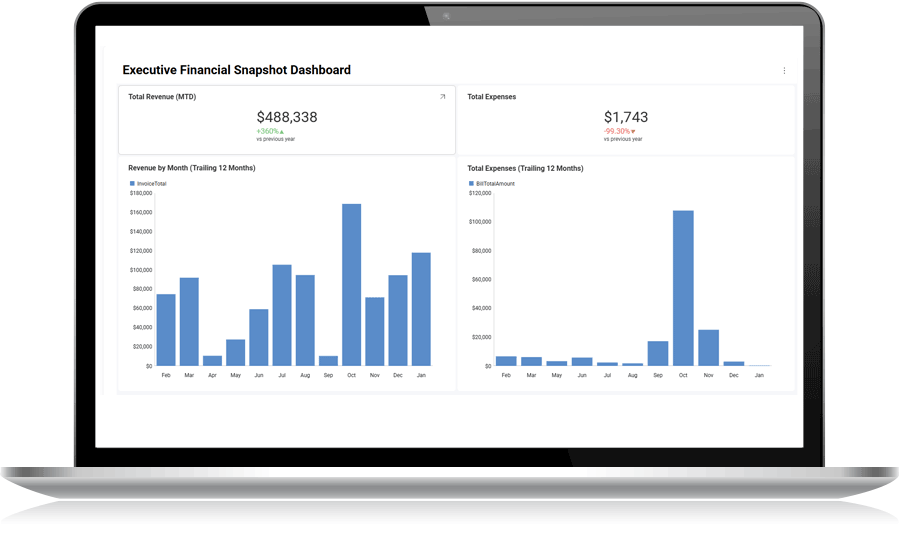
Standard Financial Reports
- Balance Sheet with inventory detail
- Profit & Loss by department, product line, or customer
- Cash Flow Statement with working capital analysis
- Trial Balance and account detail
- Comparative financials (month-over-month, year-over-year)
Manufacturing KPIs and Analytics
- Gross margin by product, customer, and sales channel
- Inventory turnover and days on hand
- Manufacturing efficiency: planned vs. actual hours
- On-time delivery percentage
- Order backlog and revenue pipeline
- Purchase price variance by supplier
Job-Level Quality Control and Production Documentation
First Article Inspection (FAI)
- First piece approval workflow
- Dimensional verification
- Customer approval requirements
- FAI documentation and retention
- Inspection reports
In-Process Quality Checks
- Operation-level inspection checkpoints
- Measurement data capture
- Quality hold and rework tracking
- Nonconformance and corrective action
- Customer-specific quality requirements
As-Built Documentation
- Job traveler with complete history
- Material lot numbers used
- Labor hours and employees
- Inspection results
- Customer approvals
- Certificate of Conformance (C of C)
Small Job Shops
- Affordable entry point with full job shop functionality
- 3-4 month implementation timeline
- Core modules: Jobs, BOM, Purchasing, Sales, Inventory, Shop Floor
Mid-Size Job Shops
- Multi-work center operations
- Advanced scheduling and capacity planning
- Customer portals and engineering collaboration
- Business intelligence dashboards
Enterprise Job Shops
- Multi-facility operations
- Complex routing and scheduling
- Advanced automation and integrations
- Dedicated professional services
ERP Implementation Without the Guesswork
QT9 uses a structured implementation model to help growing organizations deploy ERP with clarity and control. From planning and data preparation to training and go-live, each phase follows defined milestones and measurable readiness criteria — keeping your team aligned & your rollout on track.
Implementation Planning + On-Site Discovery
Every successful ERP rollout begins with clarity. In this phase, we define objectives, scope, timelines and internal ownership. Through structured discovery sessions, we assess your current workflows, reporting needs and operational priorities. This ensures your QT9 ERP environment is aligned to real business requirements — not assumptions — before configuration begins.
FAQ: Job Shop ERP
Yes. QT9 ERP captures actual material costs, labor hours, machine time, and overhead for each job in real-time. You can compare quoted costs vs. actual costs, analyze profitability by job and customer, and identify cost variances as work progresses on the shop floor.
Yes. QT9 tracks customer-supplied materials separately, allocates them to jobs at zero cost, maintains material certifications, and handles excess returns. You maintain clear visibility into customer-owned vs. company-owned inventory.
QT9 Shop Floor Manager provides paperless job travelers, barcode scanning for operations, employee time tracking, real-time progress updates, and quality checkpoints. Shop floor employees can clock in/out of operations, report quantities, and flag quality issues without leaving the production floor.
Yes. QT9 provides visual Gantt chart scheduling, capacity planning by work center, and auto-scheduling based on customer due dates. You can identify bottlenecks, run "what-if" scenarios, and optimize shop floor utilization.
Typical timelines: 3-4 months for small job shops (5-25 employees), 4-6 months for mid-size operations (25-100 employees). Timeline depends on process complexity, number of work centers, and data migration requirements. Unlimited training is included.
More manufacturing ERP resources

QT9 ERP to Add CADLink Integration for Automatic Engineering and Manufacturing Data Connection

Supply Chain Traceability: How to Maintain Visibility Across the Supply Chain

Supplier Risk Management: An ERP + QMS Playbook to Prevent Production Delays
Try QT9 for Free
Ready to unify your business processes? No credit card needed.