Share this
Episode 5: ISO 9001:2026 Updates Explained
by Christian Reyes on Dec 2, 2025, 9:04:44 AM
Watch Episode 5 Below
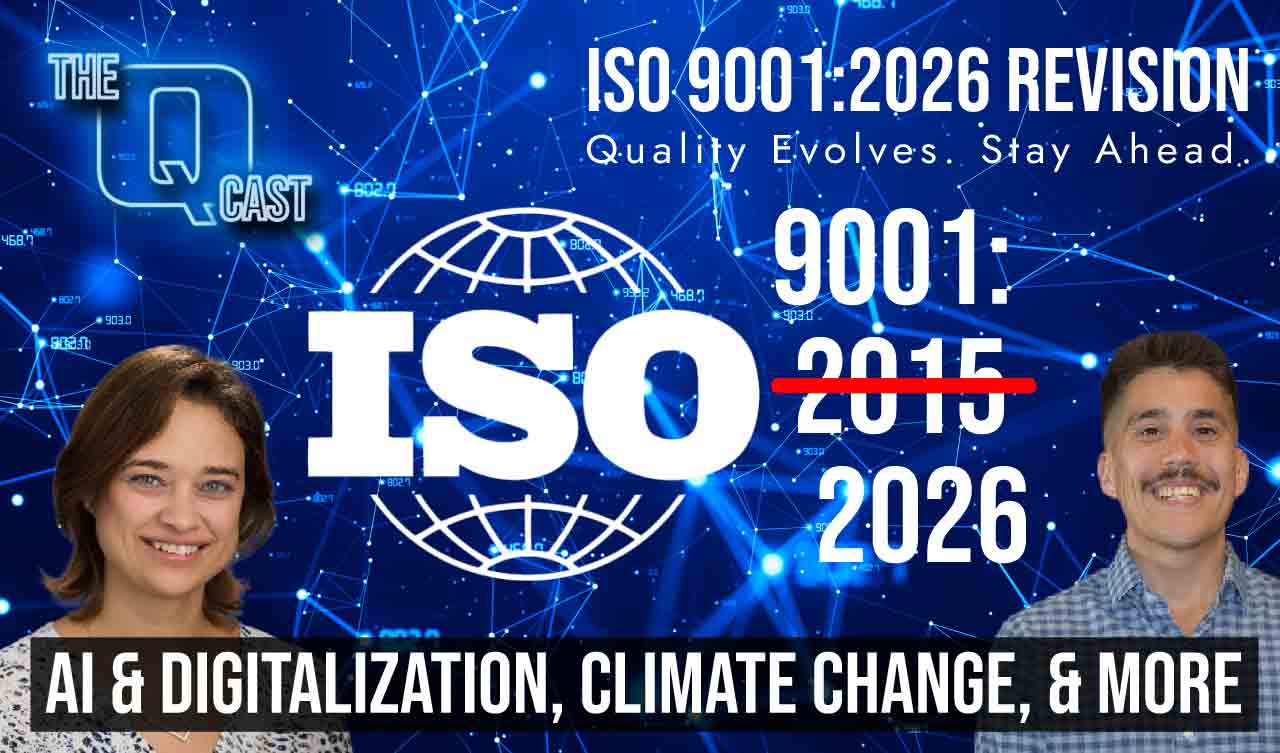
Episode 5: ISO 9001 is being updated for the first time in over a decade — and the 2026 revision is shaping up to be the most significant modernization since 2015. In this episode of the QT9 Q-Cast, host Christian Reyes sits down with veteran ISO consultant Lorraine Caputo of Lumanity to separate credible signals from speculation and break down what organizations can confidently prepare for today.
Drawing from official committee updates, DIS ballot timing, and industry guidance, Lorraine clarifies what’s likely changing, what’s staying steady, and how quality teams across manufacturing, life sciences, medical devices, aerospace, and automotive can get ahead of the curve. From climate-change requirements already in effect to expected emphasis on digitalization, ethical behavior, and leadership accountability, this episode offers a grounded roadmap for operational excellence.
Listeners will learn why the 2026 revision is an evolution, not an overhaul — and why most core clauses (4–10) remain stable. Lorraine also demystifies widespread myths, including the misconception that AI and eQMS tools will become mandatory. Instead, companies should focus on strengthening leadership, documenting climate-change considerations, piloting digital tools early, and preparing for a three-year transition window post-publication.
Whether you’re maintaining ISO 9001:2015 compliance or preparing for the upcoming FDIS in 2026, this episode equips quality professionals with high-confidence, transcript-accurate insights aligned with QT9’s mission: helping organizations digitize, automate, and elevate their quality systems with clarity and confidence.
Links & Resources Mentioned
- ISO Official Website (for formal announcements): https://www.iso.org
- American Society for Quality (ASQ): https://www.asq.org
- International Society for Pharmaceutical Engineering (ISPE): https://www.ispe.org
- GAMP (Good Automated Manufacturing Practice) Guidance via ISPE
- QT9 QMS: https://www.qt9software.com
Guest Information
Lorraine Caputo
Senior Quality Consultant, Lumanity
- Lumanity Homepage: https://www.lumanity.com
Expertise:
- 20+ years in pharmaceuticals, medical devices, dietary supplements, cosmetics, and consumer goods.
- Specializes in GMP, ISO compliance, audits, gap analyses, and QMS optimization.
Episode Transcript
Christian Reyes (00:00)
ISO 9001 is getting an update in 2026. Today we're separating credible signals from noise. I sit down with a veteran ISO expert to talk about what's likely changing, what's not, and what you actually need to know. Quick note before we start, this episode discusses a live revision. Until the new standard is published, details can change. We're drawing on official committee updates, national body briefings, and reputable industry summaries.
Our guest, Lorraine Caputo from Luminati, has her ear to the ground. So while nothing we discuss is final, it's as credible as it gets. Welcome to the QT9 QCast. I'm your host, Christian Reyes. With me is Lorraine Caputo, an expert ISO consultant who works with Luminati, one of QT9's quality consulting partners. Lorraine, it's great to have you on.
Lorraine Caputo (00:40)
Thank you, Christian.
Christian Reyes (00:41)
Lorraine is a senior quality consultant with more than 20 years of experience in regulated industries including pharmaceuticals, med device, dietary supplements, cosmetics, and consumer goods. Lorraine specializes in GMP ISO compliance, building and managing effective quality management systems, and guiding organizations through new regulatory requirements. Over the past three years, she has supported clients as a consultant by performing quality audits, conducting gap analyses against regulations, and helping companies stay ahead of evolving standards.
Speaking of evolving standards, that's exactly what we're talking about here today with the expected new revision of ISO 9001 in 2026.
Before we dive in, why should listeners treat everything we say today as informed guidance and not final requirements?
Lorraine Caputo (01:23)
Everything we're talking about today is considered guidance. We are still in the draft stage and it's subject to change. Nothing is final until it's published. I can give you guidance. I can share some insights on the changes. But don't take what I say as a checklist and think you'll be compliant. Instead, it's more of helping you to begin to prepare.
Christian Reyes (01:43)
Absolutely, absolutely. And let's kind of start off with the why. So that the rest of it makes sense. So you do think ISO 9001 was overdue for an update. Do you think they're just trying to stay ahead of the curve or are they addressing some serious concerns?
Lorraine Caputo (01:58)
It was absolutely time for an update between digitalization, the rise of AI, supply chain volatility, not to mention the new expectations around sustainability and ethics. It just felt like it was time for the ISO to be revised and catch up how businesses are working today. I don't believe the 2015 version is broken. In fact, most of it's remaining the same. The clauses four through 10 aren't really changing so much.
What I think is the integration of digitalization and technology that I feel has been a gap for a while now.
Christian Reyes (02:30)
Okay, is there anything within the digitalization that you would point to as specific pain points from the 2015 edition that you're hearing from, whether it's CVs or even just any of the clients that you work
Lorraine Caputo (02:44)
lot of companies are assuming that once the ISO is revised and published, that AI and digitalization is going to be mandated. It's going to be across the board required. And that's not the case. What you should be doing is start thinking about AI and digitizing your QMS, especially to ensure that you have all of your documentation in one place. It's readily available. If you have any QMS, everything is in one place.
you can access the data and be able to report on it, find any issues, and when you take AI and you bring that into it, it's more automated and it's actually more accurate.
Christian Reyes (03:25)
Absolutely, absolutely. And in terms of where we're at within the revision stage, we're just going to read off some dates, some quick facts, if you will, about what we actually know so far. But as of October 8th, 2025, confirmed that ISO DIS 9001 is out for ballot and the DIS ballot closes on November 19th.
2025. So that's actually in a couple of days here is is when the DIS ballot closes. And according to BSI's public materials, it's indicated that an FDIS is expected around March 2026 with a publication targeted for October 2026. And then separately ISO and IAF issued a February 2024 joint communique that added climate change considerations of
management system standards and the auditing practices group provided guidance on how auditors should approach that topic.
Lorraine Caputo (04:18)
what happens is you start with a working draft. That's the first draft, and it's only circulated internally. Think of it like the R &D phase. It's messy. There are lot of unknowns. Reformulation is needed. Then you have the committee.
Christian Reyes (04:19)
absolutely.
Lorraine Caputo (04:33)
draft which gets shared with ISO member countries where they get to review and comment. The next stage is the final public draft. It's the DIS and member countries comment again and they vote and this is where organizations can begin to prepare because what is there most likely is going to stay there.
The almost final version is the FDIS, so it's the final draft. And only minor formatting and editorial changes remain at that point. Once the member countries comment and vote, it's time for publication. And so the key takeaway of all of these different drafts is it gives them the chance to revise, refine, update the terminology, because that is actually something that's changing as well as part of this revision is the terminology that is
used within the document itself. It's just to make it more universal across all of the ISO guidelines. ⁓ So it's, I don't know what terminology is changing yet, but we do know that it's just the meaning behind the words is not going to change. It's just the terminology.
Christian Reyes (05:23)
Okay.
Gotcha, gotcha. Well, that is definitely good information in terms of the different stages of the draft of a standard, talking us through the working draft all the way through the FDIS and the ultimate international standard. And as it stands right now, we do have some dates that are, we're expected to hit each one of those stages. As we mentioned, the,
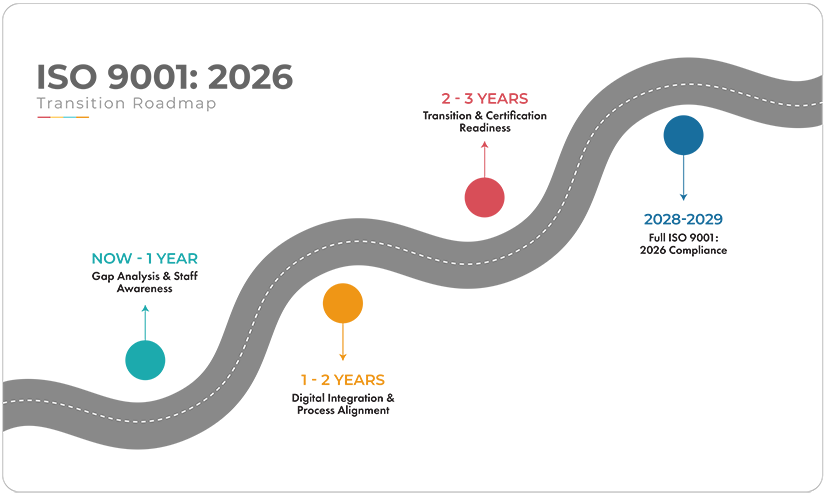
The DIS ballot closes on November 19th, so in two days here. The FDIS is expected in March or early 2026. The publication target as of right now is October 2026. And the transition period is not yet announced, ⁓ but historically, transitions have been about three years, right, for ISO 9000.
Lorraine Caputo (06:27)
Yes.
Christian Reyes (06:28)
Okay, okay, so that's probably going to be the case as it is a precedent, but it is not a promise.
Are certification bodies already adjusting how they audit these topics or are they waiting for the final text?
Lorraine Caputo (06:39)
They have to wait for the final text. They can't start auditing against anything because nothing is final yet. What happens is after the final is published, which is supposed to be around Q3, Q4 of 2026, they are going to start revising their checklist and training their auditors. Usually that takes about six to 12 months. And then at that point is where you'll start seeing them auditing against 2026 version. However,
during that transition period, you are able to use either version. Okay, so right up front, you need to decide, are you going to remain with 2015 until you get all your ducks in order for 2026? Or are you ready to go for that 2026 publication date with that three year transition period?
Christian Reyes (07:25)
Gotcha, gotcha. That's very interesting. What would be some examples of why a company would choose to move forward to the 2026, 9001 standard, as opposed to what would be some reasons why they would want to stick to the 2015 and kind of wait to transition?
Lorraine Caputo (07:44)
Well, the 2015 version is, like I said, pretty standard, and it's going to remain that way. I would recommend keeping or ensuring everyone's QMS is aligned with at least 2015, and then start thinking about the changes that you'll need to make for the 2026 version. Because let's say you do have the three-year transition period. So by 2029, you have to be compliant.
with the 2026 version. So why not start now? Why wait until the last minute? It could take a while, especially around AI and digitalization. If you're going hard paper to EQMS, that takes a lot of work. Even if you have documents electronically stored, you still have to build out your system so that it functions properly. It's better to start now because sometimes building those EQMSs can take a while.
Christian Reyes (08:36)
Absolutely, absolutely. And for a company that's kind of, let's say, first getting into ISO 9001, they're not certified now. Let's say it's either a big, big customer or something like that is kind of forcing them into it. I would assume it makes more sense for a company like that to just, obviously once we hit the FDIS stage, for them to just, you know, go with the ISO 9001 2026 from the jump, you know, start off with the new QMS, build it out.
to 2026 as opposed to starting with 2015, it's probably gonna create more work for you on the backend, right?
Lorraine Caputo (09:10)
Yeah, at the very least it will. One of the main things you need to ensure though is remember the climate change amendment. That occurred in 2024.
Companies are going to have to comply with that clause in the ISO version, even during the transition period. So right now they should be complying with that. the climate change, I don't think it pertains to a lot of companies, right? But they do still need to assess and document their outcome. If they realize climate change doesn't really affect their business practices, their supply chain, they don't need to worry, but it still needs
to be documented, right? Because if it's not documented, it's not done. One of our qualities, I ain't seen fear about a lot.
Christian Reyes (09:50)
It's not done, yup.
Absolutely, absolutely.
And so am I hearing you correct in you're saying that like today auditors can already ask whether climate change is relevant to your context as a business? Okay, okay.
Lorraine Caputo (10:08)
Absolutely, they
can ask. It's justifiable. It's in the amendment. It's official. It's part of the 215 version.
Christian Reyes (10:15)
Gotcha, gotcha. So that is not contingent on the 2026. That is in place today. And like you said, even if climate change doesn't necessarily, is not relevant to your context, everyone needs to document it. You need to document that rationale.
Lorraine Caputo (10:30)
Like I said, if climate change does in fact affect your business, I would recommend that you put that somewhere in your supplier management or your business continuity plan, just so that it's documented.
Even at the very least, if you have management review meetings, recommend discussing that topic at one of your meetings and documenting your assessment and then the outcome. Put that in your minutes and you'll be compliant.
Christian Reyes (10:47)
that's a good idea.
That's good advice. That's good advice. And so I've heard some rumblings that there's gonna be an expected emphasis on quality culture and ethical behavior in the 2026 revision. Can you kind of unpack what that might mean for leadership and awareness?
Lorraine Caputo (11:15)
Quality culture was already embedded into ISO 2015 version. It said that leadership and quality culture is part of everyone's job, basically. Everyone has to have that quality mindset. But leadership has to get more involved. They have to demonstrate a model quality. If they don't model it, you won't have that quality culture.
Christian Reyes (11:38)
Absolutely. I've heard many times it starts from the top down. You know, it's not just the quality manager, not just shop floor. It's from the top down and leadership leads by example, ⁓ ideally. Now, if you could whisper one thing in the ear of every quality manager right now listening to this about the 2026 revision, what would that be?
Lorraine Caputo (11:43)
Exactly.
Don't worry, it's not that bad. I would say just that, please, don't worry, don't stress yourself out. This revision is an evolution, it's not an overhaul. They're not rewriting the entire document. Instead, it's expanding into areas that weren't quite an issue 10 years ago.
It makes sense now for businesses to think about how they can be affected by AI and digitalization. So instead of panicking, that you have to rewrite your entire QMS, focus on small but impactful changes. Ensure leadership is engaged and communicating with employees, that your risks are evaluated and you have documentation.
that shows your emerging factors. If you do that, the transition period isn't going to be so daunting.
Christian Reyes (12:42)
Absolutely, absolutely. And I know we talked a little bit about this earlier, but if someone's or, you know, recertification audit lands right in the middle of the transition period, what should they plan for?
Lorraine Caputo (12:54)
So as I said before, you do have the option to be audited against the 2015 or the 2026 version. And it has to be decided upfront so that everyone's on the same page, including your certification body. If you're going to comply with the 2026 version, I think the first thing you need to do is a gap analysis. You have to identify where your current QMS aligns with the draft and what gaps are in place.
You need to conduct an internal audit on your QMS in preparation for compliance to the new standard. And then based on those findings of your internal audit or that gap analysis, you want to prioritize those critical and major findings and complete those as soon as possible.
assume that you're not going to be able to complete the full CAPA in time, but you should still be able to, you know, show that you have a plan in place, that you have people responsible to complete the task, when it's going to be done by. You want to show that progress is being made.
Christian Reyes (13:48)
Absolutely, absolutely. Are there any specific dates that companies should pencil in in terms of getting their internal auditors trained or briefing leadership and updating their procedures?
Lorraine Caputo (13:59)
The final DIS is scheduled for early 2026, maybe in Q1. And the official publication is Q3, Q4 of 2026. So you can begin small preparations now. But waiting for the final DIS at this point is fine. With that said, you do have to ensure that climate change has been addressed. I just want to emphasize that to make sure that everyone is at least compliant with the 2015 version.
which includes climate change.
Christian Reyes (14:31)
Yes,
yes, that is definitely important to note. Even in my research for this episode, it was popping up a lot that climate change is tied in with the 2026 revision, but that is an extremely important nugget here, is that that is already in place. The climate change is in place. Auditors can ask about it. So we want to address that and have the documentation that is needed.
Now, above and beyond kind of timeline and the different stages, Do you have any additional specific pragmatic or low regret moves that companies can do now?
Lorraine Caputo (15:07)
Absolutely. I mean, I can think of a lot. But I think...
Let's start with strengthen leadership, quality culture and ethics. We'll start there because like you said before, it goes top down. You set the example for your people. So number one right there, once you have a strong leadership team, then you can go into further steps. You want to, like I said before, compare your current QMS to the 2026 version, assess those gaps and get those
buttoned up. Ensure you have those climate change issues changed, addressed. And piloting your AI and digital tools would be a good idea. Because like I said, sometimes putting programs and systems into place can take some time. So start early rather than later. So pilot those digital tools, test your AI solutions now, and then ensure you're conducting those internal
audits that drives continuous improvement and that's one of the another motto of quality is continuous improvement. So internal audits will prep you for 2026 version and it's also going to drive your continuous improvement within the organization.
Christian Reyes (16:14)
Absolutely, absolutely. What is the biggest myth that you've heard thus far about 9,1126?
Lorraine Caputo (16:21)
The myths that I hear.
is that it's an entire rewrite. It's changing completely. Everyone has to use AI. Everyone has to use electronic systems or suffer noncompliance. That's not the case. It's just evolving. It's not changing. There's just going to be more clarity around current business practices. I think companies right now should be thinking about AI. I mean, it's kind of taken over. It's all over the place.
Christian Reyes (16:30)
You
Lorraine Caputo (16:47)
automating everything. So I just think that AI and digital systems, yes, that is something you need to comply with, but if you're not considering to use them, at least document that somewhere in your QMS so that, you know, auditors can see that you're not worried about AI and digital systems. You want to stay the way you are, no big deal.
Christian Reyes (17:08)
Yes, yeah, you're not gonna get dinged for that. You're not gonna get dinged for not utilizing AI because there's not a use case for it. I'm sure that's gonna make a few listeners rest a little bit easier tonight, which is always good. Yeah, right? You definitely want that. Now, and you might not have an answer to this, but.
Lorraine Caputo (17:16)
Exactly. Right.
I hope so.
Christian Reyes (17:33)
One thing was one thing to stop doing and one thing to start doing this month.
Lorraine Caputo (17:38)
Stop and start doing. Okay, this month, stop worrying. Stop stressing. Right there, just stop doing that. And then start planning. Now is the time, right? Like I said, don't wait until the last minute because then you'll be rushing, there will be holes, right? You don't want to have holes. So it's not a huge thing. You already have your main clauses, four through 10 that aren't changing except for maybe terminology, but it's still going to mean the same thing.
Christian Reyes (17:42)
Hahaha
Lorraine Caputo (18:05)
After
your climate change issue has been assessed and documented, the new version, the 2026 version, like I said, is not mandating that use of AI and digitalization. But if you're thinking down that road, start thinking and doing now instead of waiting. So with that said,
the AI and digitalization piece of the ISO clauses, it's going to give you the option to use it and provide clarity around that, not exactly telling you you have to use it.
Christian Reyes (18:34)
Gotcha, gotcha. Now outside of the cue cast and any future episodes, where should listeners go for authoritative updates on the progress of the 9000 Plum Revision?
Lorraine Caputo (18:45)
The first place you should go for any formal announcements is the ISO website, ISO.org. More options would be any reputable quality source like the American Society for Quality, ASQ.org. Or you also have ISPE.org, which is the International Society for Pharmaceutical Engineering. Sorry, all those acronyms sometimes I get a little confused saying. In fact,
Christian Reyes (19:06)
There you go. There are a lot of them.
Lorraine Caputo (19:11)
In fact, the ISPY, they have a good automated manufacturing practices guidance, also called a GAMP, another acronym for it. And they have this guide specifically for artificial intelligence. It's a guide to develop and utilize AI, enable computer systems, and more so the life sciences, because that's what the GAMPs are used for, life sciences, but I'm sure it could be applied to
other types of industries too.
Also, if you're already certified by a certified body, you should work with them to get the most accurate information. It's not a secret. They're not trying to keep it from you so they can have observations when they go and audit you. We are going to provide accurate advice and tell you how you should move along your steps. So I think that right there is going to be key as well.
Christian Reyes (19:53)
Yeah.
Absolutely, absolutely. Those are great resources and we'll throw links to those in the show notes here so listeners can access those easily. And kind of we're running up on our time here. So in terms of wrapping up landing this plane, finish this sentence. The 2026 revision will make ISO 9001 feel more.
Lorraine Caputo (20:11)
Good.
Relevant. It's going to feel more relevant. It's going to read less like a checklist and provide a framework for current business practices. AI and digitalization, they've advanced so quickly over the past couple of years. It's definitely time to start thinking about how these systems affects quality.
Christian Reyes (20:40)
It is definitely time. Some may say past time to address that. So that's a great answer. Definitely bringing 9001 into more relevancy in today's day and age. we are up on our time here, unfortunately, but a big thanks to you, Lorraine. We really appreciate you. Absolutely, and we'd love to have you on for a secondary
Lorraine Caputo (20:56)
There's so much more to talk about. Thank you.
Sure, maybe after the publication.
Christian Reyes (21:04)
Go get into more of good stuff. Yes, yes. I
will imagine we want to do an update episode between now and October 2026 ⁓ as things become more clear and speculation. Yep, exactly, But yes, so just remember that until publication, nothing is final, but being prepared is never premature. So we will keep our show notes updated.
Lorraine Caputo (21:16)
Something more official, right?
Christian Reyes (21:30)
with the official ISO posts and you can also find Lorraine's information in the show notes if you want to connect with her and or Lumanity. If you found today's episode helpful, please like, comment and subscribe to the QT9Q cast so that you never miss an episode and you don't miss our next check-in with Lorraine on the 9001 2026 revision. As always, thank you so much for tuning in.
stay compliant.
Stay on top of ISO 9001: 2026 updates with QT9 resources

ISO 9001 Document Control: Requirements and Best Practices
ISO 9001:2026 Transition Roadmap and QMS Guide
Share this
- QT9 QMS (12)
- Manufacturing (8)
- QMSR (3)
- FDA 21 CFR 820 (2)
- ISO 13485 (2)
- ISO 9001 (2)
- Supplier Management (2)
- AS9100 (1)
- Aerospace & Defense (1)
- Analytics & Reporting (1)
- Business Intelligence (1)
- CAPA (1)
- CMMC (1)
- COPQ (1)
- Cannabis (1)
- Change Control (1)
- Continuous Improvement (1)
- Inspections (1)
- QT9 BI Tool (1)
- QT9 ERP (1)
- Software Validation (1)