
Demand Forecasting Software for Manufacturing Procurement
Transforms demand planning from disconnected spreadsheets and guesswork into automated purchasing intelligence.
Forecast Planning
Create item-level demand forecasts up to 24 months in advance.
PO Automation
Easily convert forecasts into purchase orders.
MRP Integration
Forecast demand feeds directly into MRP calculations.
Real-Time Visibility
View forecasts alongside orders and inventory to identify potential gaps.
Supplier Alignment
Automatically apply supplier minimums, price breaks and lead times when generating POs.
Long-Range Planning
Plan procurement up to two years out to support long-lead materials, contract and capacity planning.
What is demand forecasting software?
Demand forecasting is how manufacturers predict future material demand and translate those projections directly into purchasing and production planning. ERP forecasting software integrates projected demand with inventory levels, supplier lead times, open purchase orders and production schedules. This enables procurement teams to anticipate material needs and purchase at the right time.
QT9 ERP Forecasting module transforms demand planning from spreadsheet projections into automated procurement intelligence, enabling manufacturers to reduce shortages, prevent excess inventory and provide earlier visibility into procurement requirements. Users can create multi-month forecasts for purchased or manufactured items, then convert those forecasts directly into purchase orders or production planning inputs. Because forecasting operates inside the ERP transactional engine, demand projections immediately influence Material Requirements Planning calculations and inventory planning decisions.
Interactive Video Demo
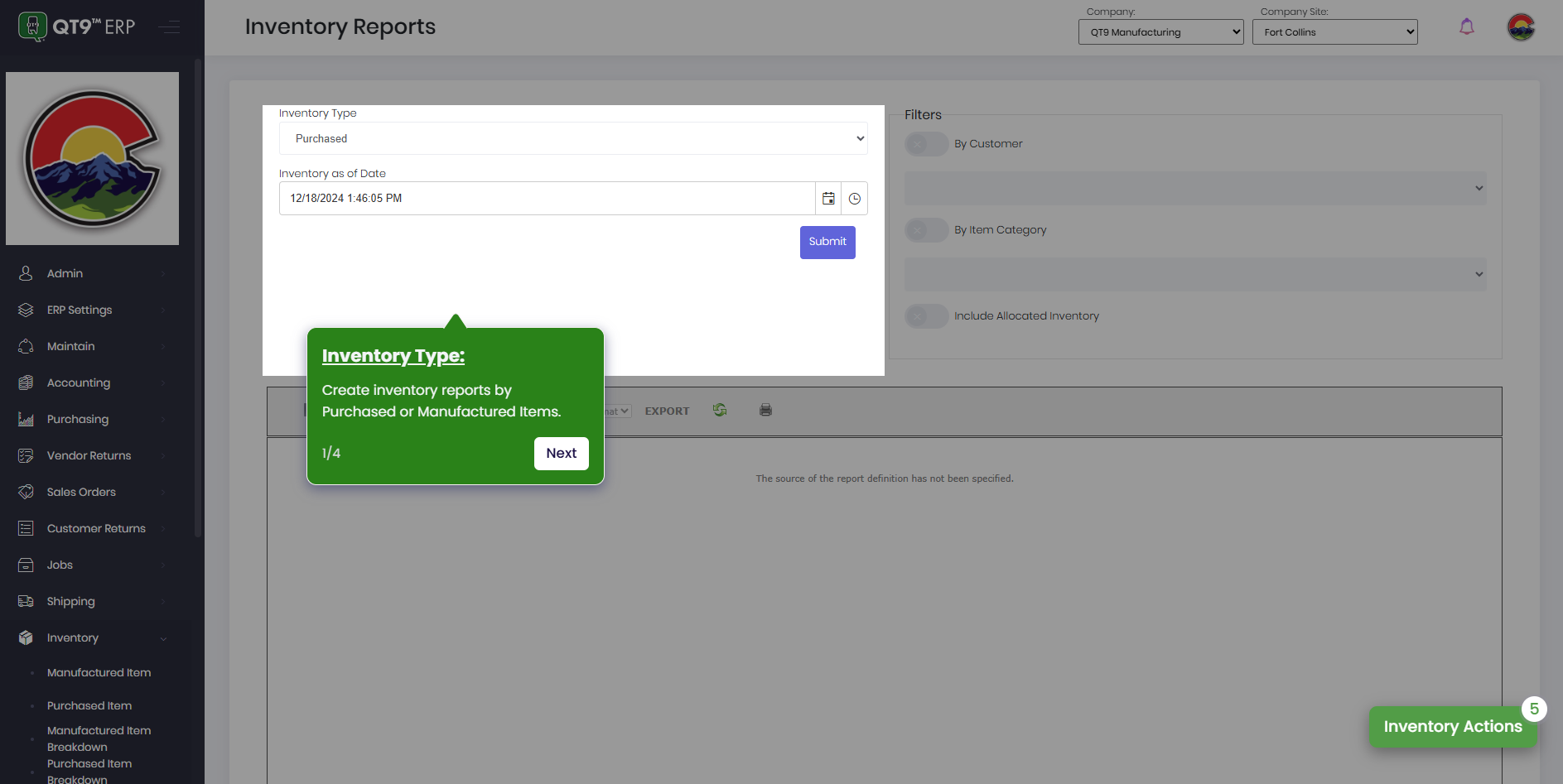
QT9 ERP Inventory Control Demo
QT9 ERP Forecasting module
Demand visibility meets automated procurement
Build multi-month forecasts for purchased and manufactured items, then convert that forecast directly into purchase orders and production jobs, eliminating the disconnect between planning and execution.
What makes QT9 ERP Forecasting module different?
Forecast-Driven MRPMany ERP systems only trigger material requirements after a production job is created. QT9 ERP calculates component demand directly from forecasts, enabling procurement teams to prepare materials before jobs begin. |
Unified Demand PlanningQT9 ERP supports multiple demand sources within one planning engine, including:
This unified approach allows manufacturers to balance real orders with anticipated demand without double-ordering materials. |
Integrated ComplianceBecause forecasting operates inside QT9’s ERP and QMS environment, generated purchase orders automatically reflect supplier qualification status and inspection requirements, preventing delays caused by quality gates.
|
Supplier ManagementSupplier delivery performance and quality outcomes influence future planning assumptions, helping teams refine lead-time expectations and improve forecast accuracy over time. |
Extended Planning HorizonForecast up to 24 months into the future to support long-lead procurement, supplier contracts, and manufacturing capacity planning.
|
Simplify inventory with inventory control software
Explore the core features manufacturers trust to monitor inventory, streamline logistics and keep teams in sync, all in one platform.
Automated POs
Generate purchase orders directly from forecasted demand.
Item-Level Planning
Forecast demand by item across daily, weekly or monthly periods.
Batch Updates
Update multiple items or time periods simultaneously.
Real-Time Visibility
See demand gaps before they impact purchasing decisions.
MRP Integration
Forecast demand feeds directly into MRP calculations.
Supplier Rules
Forecast-driven purchase orders follow pre-configured supplier rules.
Ready to plan procurement with confidence?
Forecasting in QT9 ERP connects demand planning directly to purchasing execution.
Gain visibility into upcoming demand months in advance, allowing you to purchase materials earlier, negotiate supplier schedules and avoid production disruptions. Because forecasting integrates with MRP, inventory management, supplier data and quality workflows, planning decisions immediately influence operational execution.
The result is more predictable purchasing, fewer shortages, improved supplier coordination and better alignment between demand forecasts and manufacturing schedules.
See how QT9 ERP connects forecasting, purchasing and production and helps manufacturers save time and money, and speed delivery.

Everything You Need to Run Manufacturing in One ERP Platform
FAQ: Demand Forecasting Software
Demand forecasting in ERP is the process of predicting future product demand and translating those projections into procurement and production planning. ERP forecasting integrates projected demand with inventory levels, supplier lead times, and purchasing workflows.
ERP forecasting provides forward visibility into material demand so purchasing teams can place orders earlier, avoid shortages, and maintain optimal inventory levels.
Using ERP software for demand forecasting allows manufacturers to connect demand planning directly to purchasing, inventory and production decisions, improving accuracy and reducing supply chain risk.
Key benefits include:
1. Better demand visibility
2. More accurate purchasing decisions
3. Reduced shortages and stockouts
4. Lower excess inventory
5. Integrated production planning
6. Faster planning adjustments
ERP demand forecasting helps manufacturers move from reactive purchasing based on shortages to proactive planning based on anticipated demand, improving both operational efficiency and working capital control.
Demand forecasting software collects historical sales data, analyzes trends such as seasonality and market signals, and uses statistical models or algorithms to generate demand predictions that guide inventory and purchasing decisions.
Most demand forecasting software includes historical demand analysis, statistical forecasting models, scenario planning, inventory planning tools, and integration with ERP or supply chain systems.
Demand forecasting focuses on predicting future demand, while demand planning uses those forecasts to determine purchasing, inventory, and production strategies across the supply chain.
Yes. By predicting future demand more accurately, forecasting software helps companies maintain optimal stock levels, reducing excess inventory carrying costs while minimizing stockouts.
Explore our latest ERP articles

Five Signs You’ve Outgrown Your ERP System

ERP in Supply Chain Management: How Manufacturers Gain Control, Visibility and Predictability

Best Software for Inventory Management in Regulated Manufacturing
Run Your Operation With Clarity and Control
See how QT9 simplifies operations today and scales with you tomorrow.