Share this
by QT9 Software on March 24, 2026
Quality auditing has evolved from manual, paper-based systems to digital QMS platforms that enable real-time data analysis, automation and AI-driven insights. Today, audits are faster, more accurate and increasingly continuous rather than periodic.
Quality management has undergone a quiet but profound transformation over the past three decades. What was once a discipline defined by checklists and paper binders has evolved into a data-driven, strategic function that not only supports quality and compliance, but also helps shape how organizations operate, compete and grow.
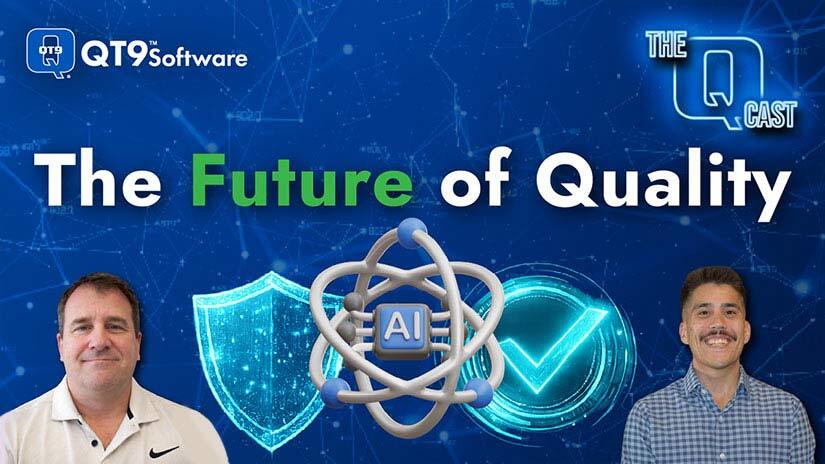
In the latest episode of the QT9 Q-Cast, we explore how digital QMS, AI and automation are reshaping audits and what it means for modern quality leaders. We take a deep dive into the transformation of quality management with Brian Powers, an expert auditor from World Quality Systems with nearly 30 years of experience. From the "paper chaos" of the 90s to the predictive power of modern software, Powers shares his unique perspective on where the industry has been and where it’s headed.
Prefer to watch?
Watch the full episode below, or continue reading for a breakdown of key insights on digital QMS and quality auditing.
Watch the QT9 Q-Cast podcast with veteran auditor Brian Powers, of World Quality Systems.

Contents
From paper-based QMS to process-driven quality systems
The shift to digital quality management
The "biggest weakness" in modern quality management
The future of quality: data, AI and automation
What defines a modern digital QMS?
The strategic advantage of digital QMS adoption
From paper-based QMS to process-driven quality systems
Two decades ago, quality management revolved around document control in its most literal form. Thick binders housed paper-based quality manuals, procedures and work instructions. These systems created a clear hierarchy of documentation, but they also introduced friction. Audits often became exercises in verification rather than evaluation.
Even if documentation existed, notes Powers, it wasn’t always used. Dusty binders were often a sure sign that the quality system had become disconnected from daily operations.
A shift began with the introduction of ISO 9001:2000, which reduced prescriptive documentation requirements and encouraged process-based thinking.
“When the 2000 standard revision came around, that was revolutionary because a lot of the procedural requirements disappeared,” says Powers. “It took a while… for companies to even grasp the concept and make the change.”
The shift to digital quality management
While quality management software existed, it was rare to see it in practice until about 10 years ago, notes Powers. It was around 2015 that digital systems became more common in audits.
From an auditor’s perspective, the increased use of QMS software like QT9 has several notable advantages:
Faster audit processes: When using QMS software, retrieval of records is significantly quicker, allowing for more efficient traceability exercises.
Organizational continuity: A digital quality system ensures documents and processes remain easily accessible if key quality team members leave an organization. Powers says he’s often consulted about this exact issue.
Real-time data: Digital QMS platforms give manufacturers real-time insight into areas, such as supplier performance or corrective actions, that can help them make better quality and performance decisions.
The "biggest weakness" in modern quality management
Powers believes that one of the greatest benefits of using a digital quality management system is the ability to collect organizational data, often in real time. Yet he highlights the persistent gap in how companies handle information as being a missed opportunity.
"The biggest weakness in companies that I go to is the data analysis. Most companies are great at collecting data, but they're horrible at processing the data and then presenting the data in a way that will help their managers make better decisions."
Collecting data for the sake of collecting is "pointless,” he says. The real value lies in analyzing that data to find trends or issues that can help drive continuous improvement.
The future of quality: Data, AI and automation
Looking ahead, Powers sees Artificial Intelligence (AI) as a promising solution for the industry. AI and digital applications can help present data in ways that are useful for everyone, from frontline employees to the C-suite.
Continuous auditing
Continuous auditing is the use of software to assess data and internal controls on an ongoing basis, theoretically enabling real-time detection of potential issues. Rather than periodic audits, digital systems can monitor compliance in real time. Automated checks ensure that processes align with requirements as work is performed.
As Powers suggests, future QMS platforms may effectively “audit themselves,” flagging deviations and continuously generating performance insights so teams can act fast.
Real-time support
Powers has seen frontline employees using mobile devices to quickly search for proper procedures using AI or QR codes, reducing or eliminating mistakes before they move downline.
Predictive quality
By analyzing historical data, organizations can identify patterns that signal potential issues before they occur, shifting quality from inspection to prevention.
“If the right software is used,” says Powers, “you might be able to find some trends, some little quirks, something in the data that could tell you something’s going on here.”
AI-driven insights
Powers sees the best quality role for AI and other advanced technology in the processing and presentation of data so that it is most useful for employees at every level.
What defines a modern digital QMS?
Digital QMS platforms transform quality from a documentation exercise into a connected ecosystem. Other key eQMS features include:
Centralized and connected data and processes
Modern QMS systems unify quality processes, such as CAPA, audit prep, training and document control, into a single platform. This eliminates silos and creates a single source of truth.
Workflow automation
Automated notifications, task assignments and escalation paths ensure processes continue regardless of personnel changes.
Built-in compliance frameworks
Digital systems embed regulatory requirements into workflows, reducing the risk of nonconformance.
Solutions like QT9 reflect this evolution, offering integrated modules, multi-site capabilities and configurable workflows that adapt to organizational needs.
The strategic advantage of digital QMS adoption
For quality management leaders, the value of digital transformation extends far beyond efficiency gains.
Faster, more effective audits
Digital systems significantly reduce audit friction. Records can be retrieved instantly, traceability is streamlined and audit cycles are shortened. Powers notes that audit speed has improved largely due to faster access to data and documentation.
Improved decision-making through data analysis
The ability to process and visualize data transforms quality from reactive to proactive. Leaders can identify trends, detect anomalies and prioritize improvements based on evidence.
Business continuity and resilience
A digital QMS ensures continuity regardless of staffing changes. Processes, records and workflows remain intact and accessible.
Enhanced employee engagement
Technologies such as mobile access and QR codes bring quality processes directly to frontline employees, enabling faster and more accurate decision-making.
Alignment with enterprise systems
Integration with ERP and MRP systems creates a more cohesive operational environment, linking quality outcomes with broader business performance.
Final thoughts
The evolution of QMS software reflects a broader transformation in how organizations think about quality. What began as a documentation requirement has become a strategic capability.
By embracing digital systems, quality leaders can move beyond maintaining compliance to driving measurable business impact.
The question is no longer whether to digitize quality management—but how quickly organizations can make the transition.
